




Three Statements Model
Objectives
Integrates the income statement, balance sheet, and cash flow into one dynamically connected financial model. It is used to forecast a company’s future financial performance based on its historical performance.
How to build
- Start with the income statement, projecting revenues, and costs, and arriving at EBITDA.
- Based on the income statement calculate key balance sheet positions like, AR, AP, inventory
- Build CAPEX and Debt schedules in import outcomes in the balance sheet
- Build the cash flows based on the changes in the balance sheet and income statement items.
Outcomes
A projection of a company’s future financial health.
Understanding of how statements interact.
Insight into a company’s liquidity, profitability, and solvency over time.

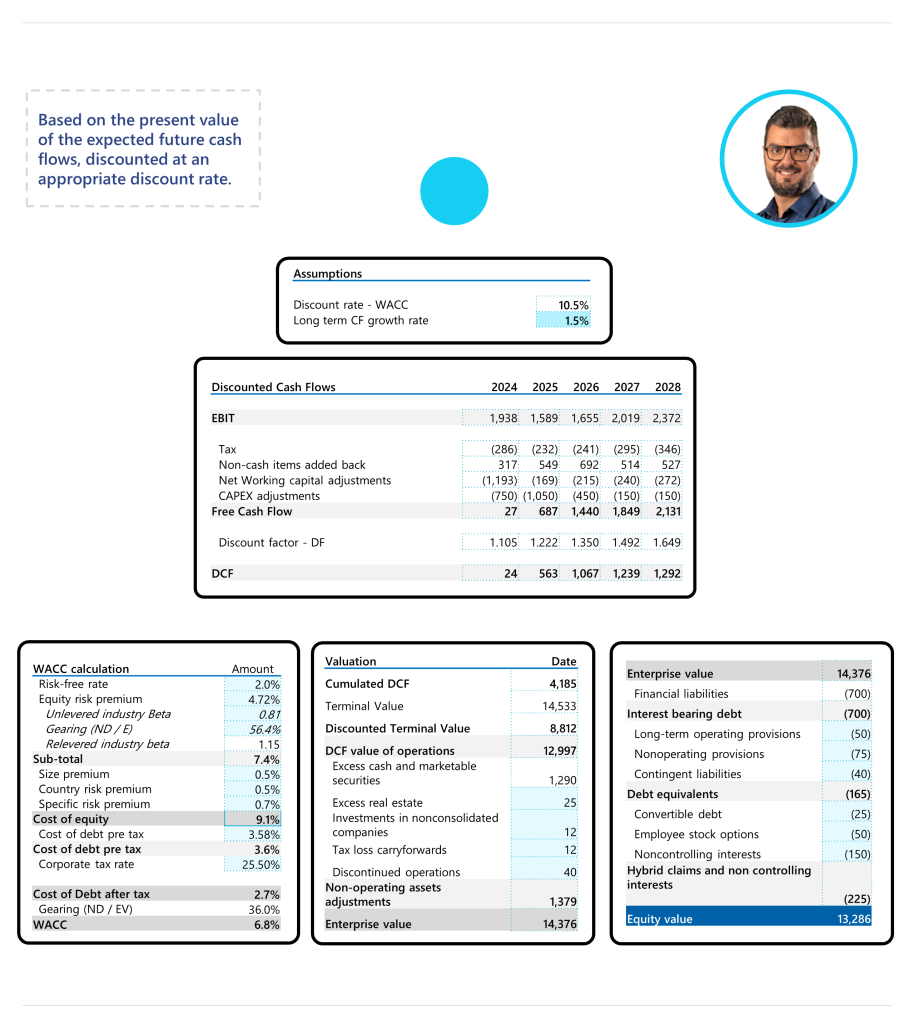
Discounted Cash Flow Model
Objectives
Estimates the value of an investment or company based on its expected future cash flows, adjusted for the time value of money. It’s widely used in equity research and corporate finance.
How to build
- Forecast free cash flows (operating cash flow minus capital expenditures) for the projected period.
- Calculate the terminal value using either a perpetual growth model or an exit multiple.
- Discount the cash flows to the present value using the weighted average cost of capital (WACC).
- Sum the present values to get the total enterprise value.
Outcomes
Company’s intrinsic value, Understanding of how changes in assumptions (e.g., WACC, growth rates) impact valuation.
Sensitivity analysis results to understand valuation under various scenarios.
Leveraged Buyout Model
Objectives
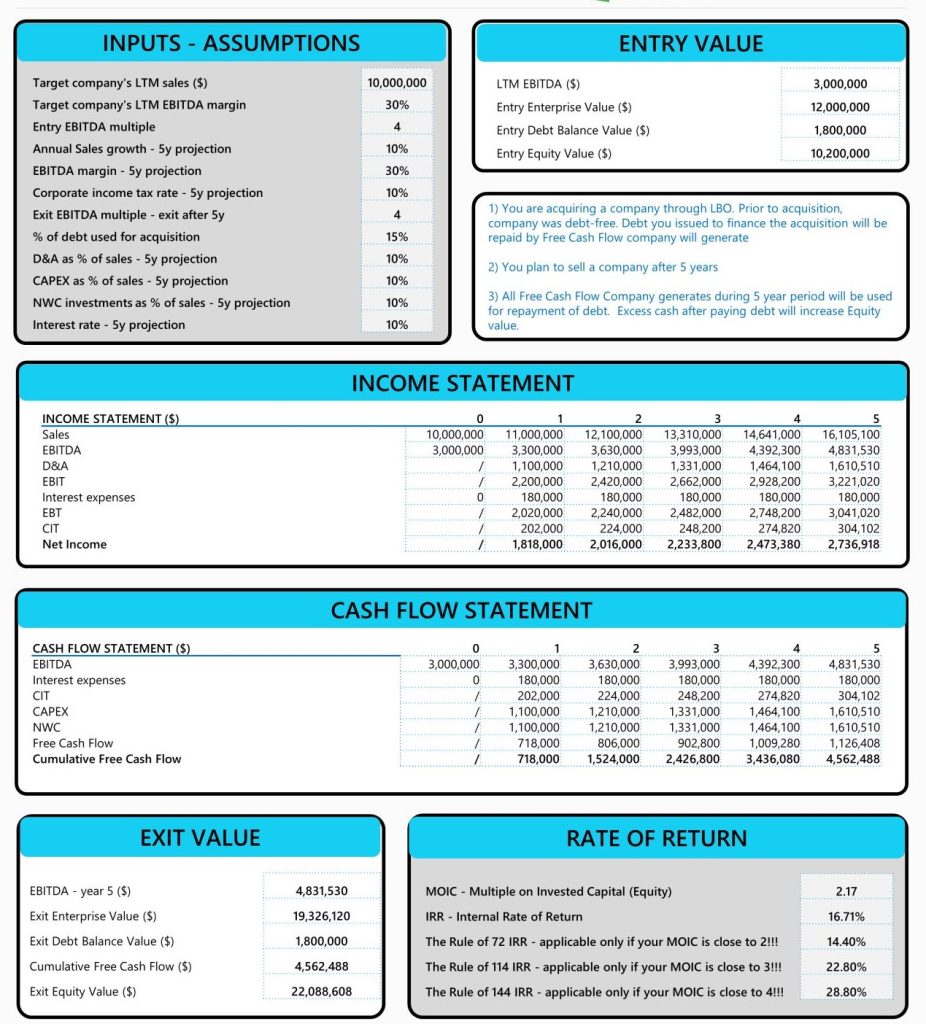
Used primarily in private equity and investment banking, it helps in evaluating the financial feasibility of acquiring a company using a significant amount of borrowed money (leverage).
How to build
- Create assumptions about the purchase price, debt, equity, and interest rates.
- Build sources and use a table to understand where capital is coming from and how it will be used.
- Forecast the company’s financial statements, incorporating the debt repayments.
- Model out the exit strategy and calculate the internal rate of return (IRR) and equity multiples
Outcomes
Feasibility assessment of an LBO transaction.
Expected Internal Rate of Return (IRR) for equity investors.
Debt repayment schedule and understanding of leverage effects on company’s performance.
M&A Model
Objectives
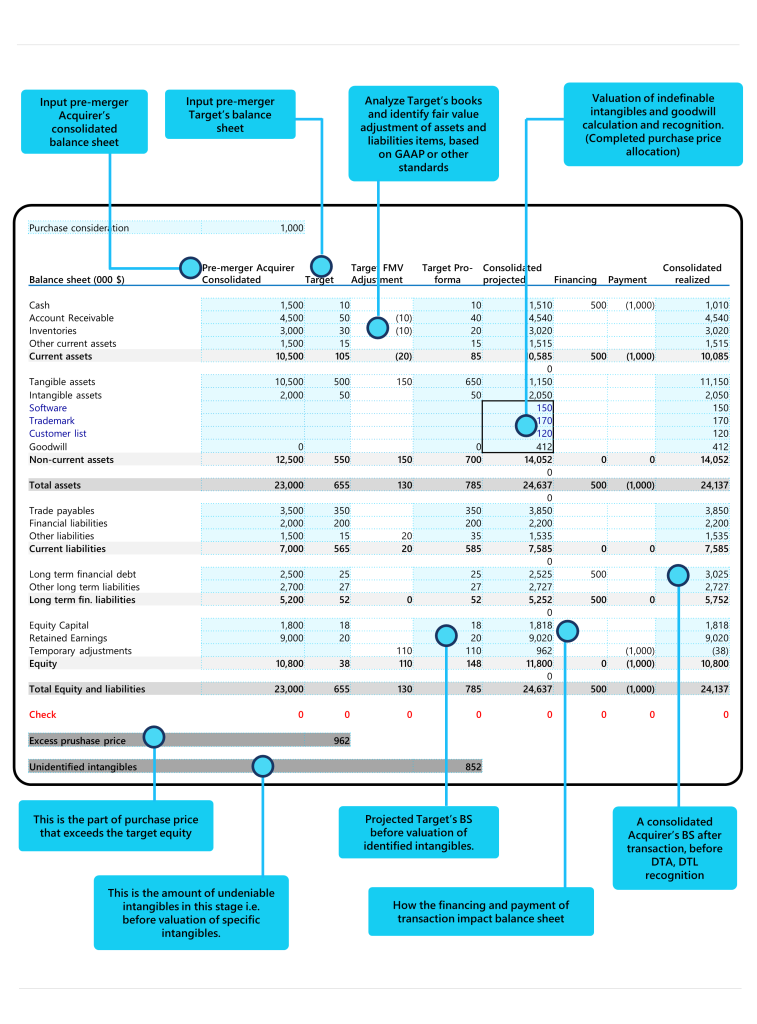
Evaluates the financial viability of a merger or acquisition. It’s used to analyze how the consolidation affects the combined company, including accretion/dilution of earnings per share (EPS).
How to build
- Develop assumptions about the deal, such as purchase price, form of payment (cash, stock, or both), and synergy projections.
- Build standalone models for both the acquirer and the target.
- Combine the income statements of both entities and adjust for synergies and the financing mix.
- Analyze the impact on EPS and other metrics.
Outcomes
Accretion/dilution analysis of earnings per share (EPS) post-merger.
Synergies estimate post-merger.
Impact on financial metrics and ratios of the combined entity.
Budgeting Model
Objectives
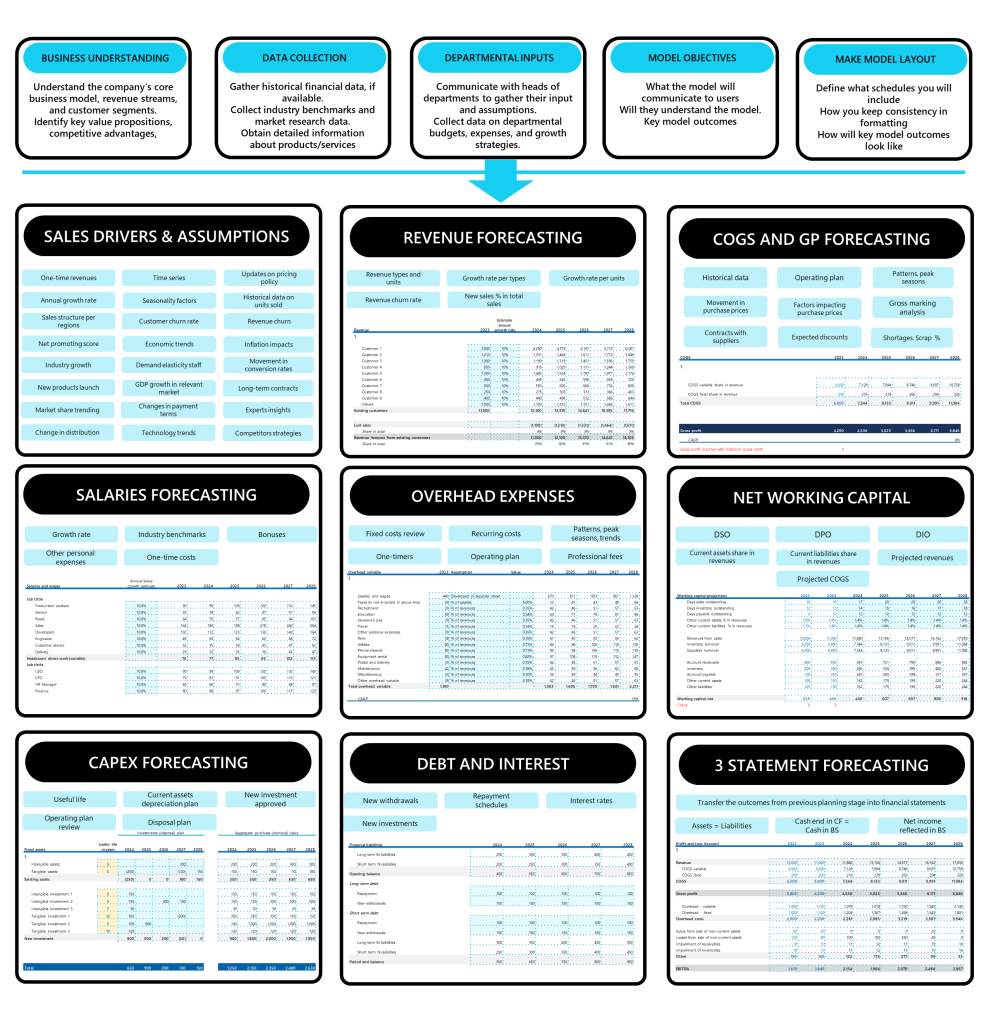
Used for internal planning and budgeting within a company. It helps in allocating resources for the upcoming year(s). Used to apply various budgeting methods like zero-based budgeting, bottom-up budgeting, top down budgeting, beyond budgeting, and others.
How to build
- Collect customer data, sales pipeline data, and hiring plans.
- Get info about the budget per department
- Start with revenue and cost projections.
- Break down the budget into various departments or units.
- Integrate expected financial statements and cash flow projections.
- Compare actual performance with the budget
Outcomes
A detailed financial plan for business operations.
Identification of cost savings or areas requiring additional investment.
Basis for performance evaluation and management accountability.

Forecasting Model
Objectives
Similar to budgeting models but usually with a longer horizon, focusing on predicting future financial performance based on historical data and growth assumptions.
How to build
- Use historical data to identify trends and growth rates.
- Project future revenue and expenses based on these trends.
- Create projected financial statements.
- Regularly update the model as new data becomes available.
Outcomes
Predictions of future revenue, profit, and growth trends.
Guidance for strategic planning and decision-making.
Early warning signs for potential financial distress.
Conclusion
It’s time to transform theory into practice.
Imagine confidently wielding these models to dissect real-world scenarios, analyze investment opportunities with laser precision, and build airtight financial projections that impress clients and colleagues alike.
This isn’t just about understanding formulas; it’s about harnessing the power of finance modeling to make informed decisions, unlock profitability, and drive success.
Ready to unleash your inner financial modeling maestro?
Our comprehensive Finance Modeling Course is your key to unlocking the next level of financial fluency. In this immersive program.
The time to act is now. Don’t let your theoretical knowledge gather dust.
Enroll in our Finance Modeling Course today and turn your financial modeling potential into reality.